
February 19

1908 – Many people were traveling by train from Miami to Knights Key “solely for the novelty of the ride over the sea by rail.” A large quarterboat was furnished as a “floating hotel” to accommodate those who wished to stay overnight at Knights Key Dock.
1926 – C.W. Barron, publisher of the Wall Street Journal, was visiting the Keys on his yacht and commented, “Key West holds advantages not possessed by any city in the state of Florida. When the new motor Over-Sea Highway is completed and a water supply is secured from the mainland, I cannot see anything further that Key West needs.”
1926 – Customs officials at Key West seized a new Dodge touring car near the airfield that was loaded with 18 demijohns and 34 quarts of liquor. The boat and smugglers that brought the illegal alcohol had made a quick getaway, and no arrests were made.
1929 – Renowned song writer and composer Irving Berlin arrived at Key West from Long Key on the yacht Windswept. After a short stay in the city, he returned to Long Key.
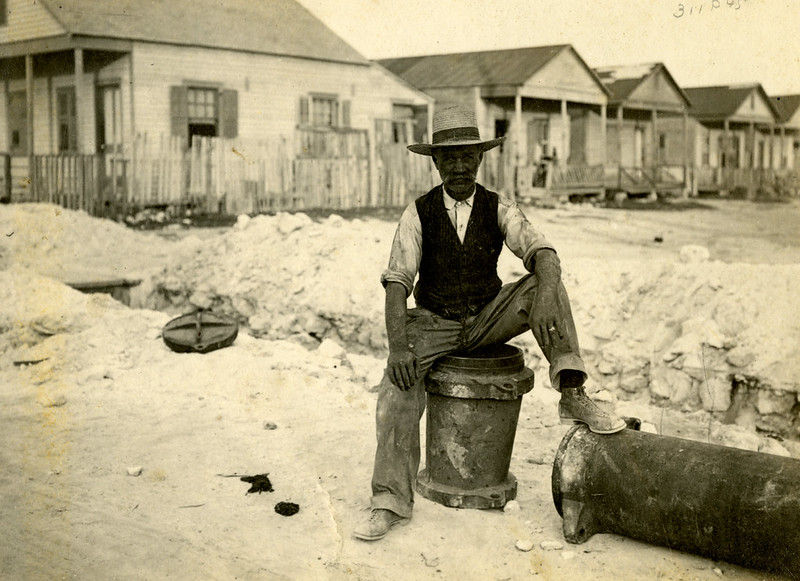
1936 – E.A Pynchon, administrator of the Works Progress Administration for Florida, visited Key West to confer with local officials and to assess the sewerage work being done by WPA crews.
1970 – Two U.S. Navy destroyers, the USS Kretchmer and the USS Foster, arrived from Pearl Harbor to join Key West’s Destroyer Division 601.
1983 – The USS Hercules (PHM-2) and the USS Gemini (PHM-6) arrived at Trumbo Point after a 5,000-mile voyage from Bremerton, Washington. The ships were assigned to Patrol Combatant Missile Hydrofoil Squadron Two station in Key West.
1986 – Staff at Florida Keys Community College estimated that one-third of students were enrolled in computer-oriented classes. The campus had nearly 50 computers available for student use, including 30 Apple II & III units, an IBM 34 with 10 terminals, and NCR word processing machines.
Information compiled by Dr. Corey Malcom, Lead Historian, Monroe County Public Library, Florida Keys History Center.
Image: A Works Progress Administration (WPA) worker installing sewer lines in Key West in the 1930s. Wright Langley Collection. Monroe County Public Library, Florida Keys History Center.


