

A Bicentennial Time Capsule Is Unearthed, 50 Years Later

On April 6, 1976, fifth-graders from the Gifted and Talented program at May Sands School in Key West buried a time capsule. It was the Bicentennial and, like many others, they wanted to mark the occasion with a record of their own times.
They left four letters with instructions to open in 50 years — on April 6, 2026 — with the school's principal, the Monroe County Schools Superintendent, the Key West Mayor and the Monroe County Public Library. The Library's letter, along with a newspaper story documenting the time capsule, is in the collection of the Florida Keys History Center. Three of the letters survived and were returned to the school for the retrieval of the capsule

On Monday, April 6, Dr. Corey Malcom, lead historian at the Library's Florida Keys History Center, joined Key West Mayor Danise "DeeDee" Henriquez, Monroe County Schools Superintendent Edward Tierney, Montessori May Sands School Principal Sandy McCoy, School Board members and other dignitaries to follow the directions in the letter. One of the students who buried the capsule, Charlotte Austin Sevilla, was also there to help guide the retrieval.
"For 50 years their buried repository has rested quietly as the island has changed in a myriad of ways," Malcom said before the digging started. "Today, it serves as a bridge through time, connecting us directly to the world of the students who buried it all those decades ago."

Inside, they found the complete edition of the Miami Herald from March 23, 1976, a box of slides, a cassette tape, and information on endangered species from 1976.

They also had a letter explaining the time capsule, labeled OPEN THIS FIRST.
The letter describes how the students wanted to "leave some evidence of 1976 that may not be found in history books."
The cassette tape, they said, includes the voices of the children who buried the capsule, their names "and some interesting things about 1976," along with a narration of the slides.
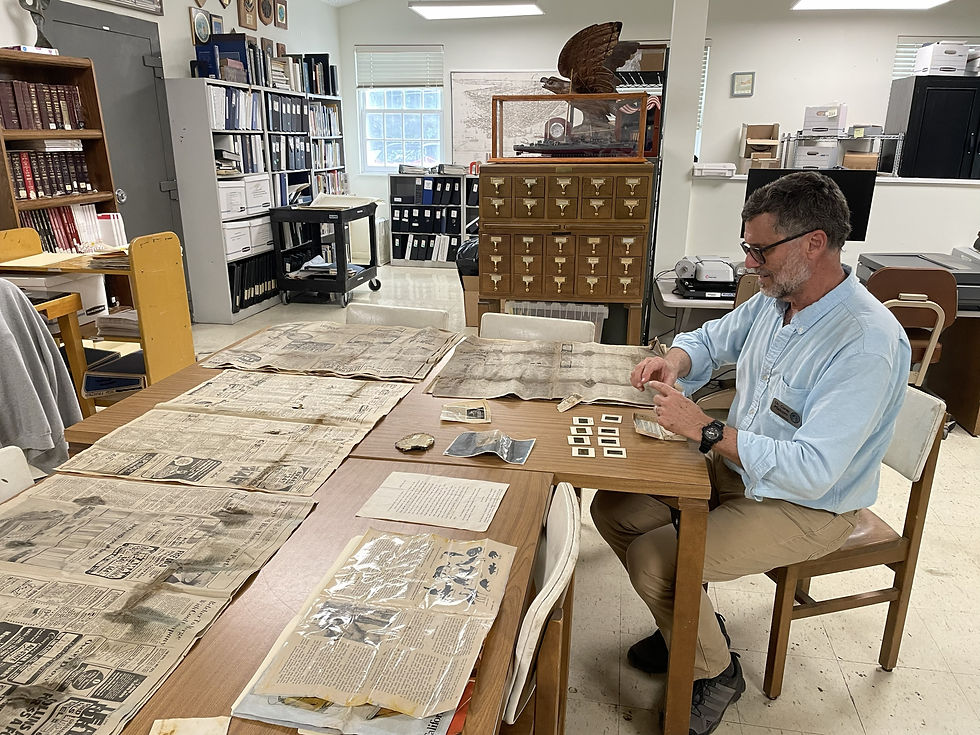
The items contained in the concrete capsule were damp but surprisingly intact after being buried for 50 years. They have been taken to the Florida Keys History Center at the Key West Library where they will be stabilized, conserved and, where possible, digitized to add to the Library's online collection.
The school plans to bury another time capsule documenting 2026, to be opened in 25 years. Letters with directions about retrieving those items will be sent to the same recipients, including the Florida Keys History Center.

